Chimney work
Chimney pots, cowls and flaunching
The visible fittings at the top of a chimney need to suit its condition and use. A loose or damaged component deserves a proper assessment. For Isle of Wight homes.
Updated
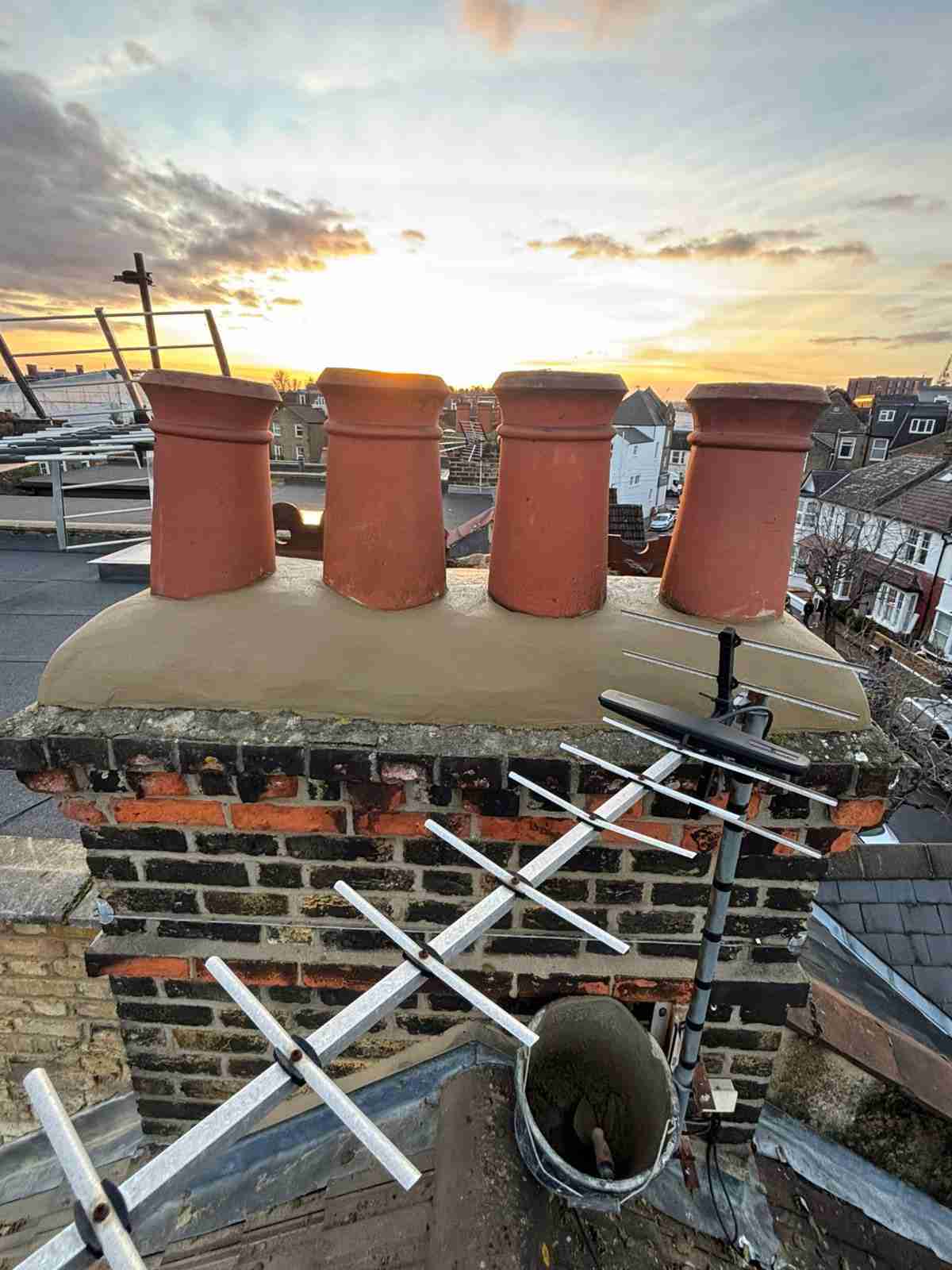
The top of a chimney is prominent in the skyline and difficult to inspect closely from the ground. A pot that appears tilted or a damaged fitting should prompt a professional assessment, with people kept clear of any area at risk from falling material.
The pot, any fitted terminal or cowl, and the weathering around the top of the stack need to be considered together. The intended use of the flue is an essential part of that discussion.
Describe what is visible
Take photographs from a safe ground-level viewpoint and identify the stack concerned. Record whether the fireplace is in use and provide any appliance information available. Avoid assuming that a fitting suitable for an unused chimney is also suitable for an active flue.
Tell WWR Roofing whether the flue is active, disused or intended for future use when enquiring about roof-level chimney work. A cap or cowl must suit that use and the conditions at the stack. Obtain appropriate appliance and flue advice before changing a terminal associated with a working fire.
Distinguish weathering from flue safety
Flaunching is the weathering around the pots at the top of a chimney. If repair is recommended, have the contractor explain the condition found and the work included. A photograph of the repaired top is useful for the property record.
Keep any required appliance or flue checks separate from the roofing scope. Renewing an external component does not, by itself, confirm that the combustion appliance and flue are safe to operate.
Retain the character of older stacks
Pots and other chimney details can contribute to a building’s appearance. Discuss whether existing components can be retained and establish any permissions needed before altering a protected building. Do not assume removal is simply a maintenance decision because the fireplace is no longer used.
At completion, retain product details, photographs and any specialist recommendations. Clear records help a future contractor identify the fitting and understand the purpose for which it was selected.
Our chimney work service covers roof-level enquiries. The chimney repair planning guide explains how to coordinate access, related repairs and the handover record.
Roofing advice from WWR Roofing for Isle of Wight properties. For advice and a quotation for your property, tell us about the work you need.