
Chimney work
Chimney leaks and damp
Damp around a chimney can have several explanations. The stack, roof junction and use of the flue belong in the assessment. For Isle of Wight homes.
Updated
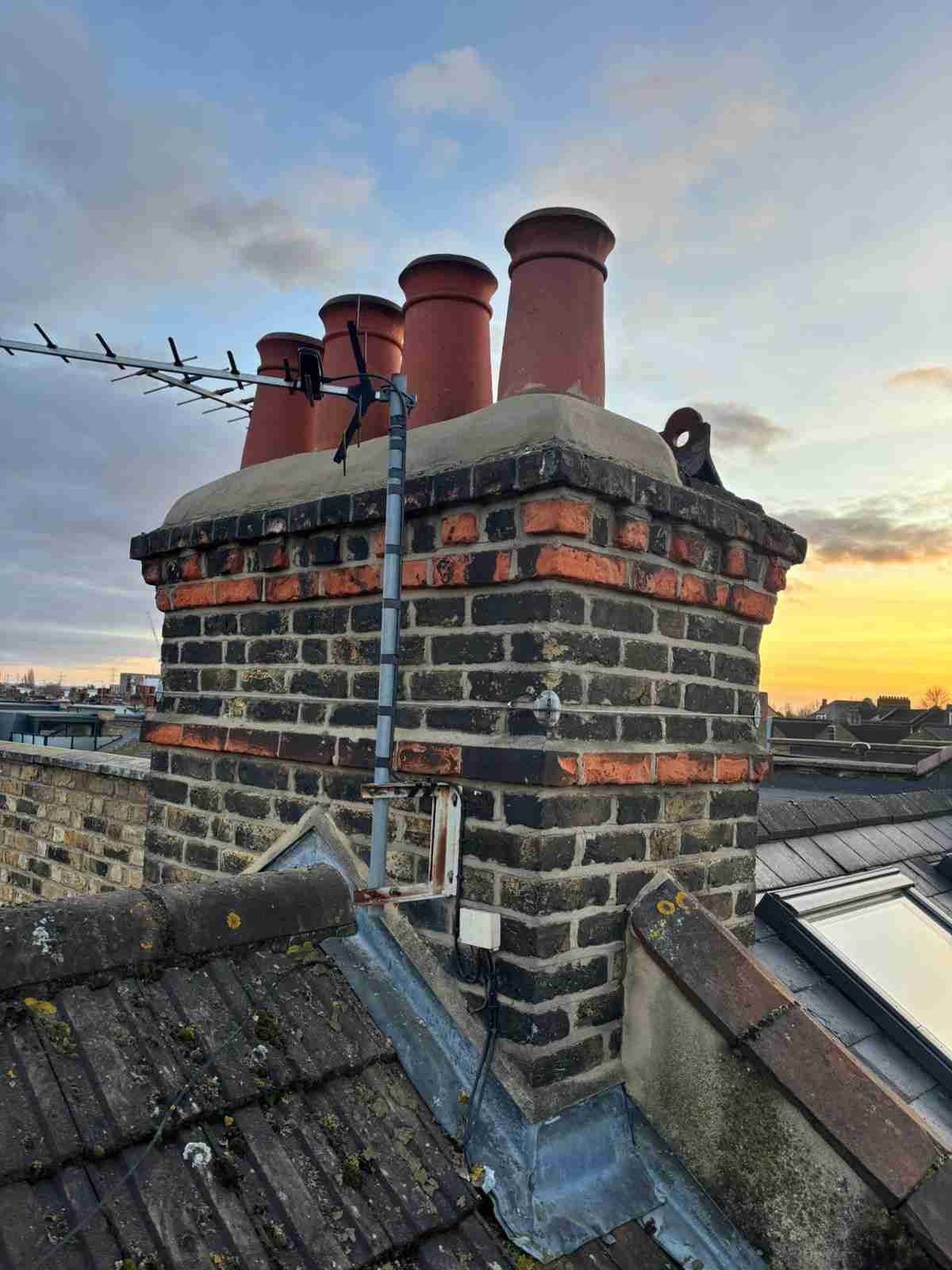
A damp mark beside a chimney often prompts an immediate request for new flashing. The roof junction deserves inspection, but it should not be assumed to explain every stain associated with the stack.
Chimneys bring masonry, weathering details and an internal flue together. A useful investigation starts by recording where the moisture appears and how the chimney is used.
Provide the history of the symptom
Note whether the damp follows rainfall, whether it changes with the season and whether the fireplace is active or disused. Include previous roof or chimney repairs and any known alterations. A dated photograph of the same internal area can help show a change without disturbing the fabric.
Give WWR Roofing the timing and location of the damp, along with the chimney’s recent use. Rainwater entry and moisture within the chimney need different investigations. The colour of a stain alone cannot establish which part of the stack, junction or flue needs attention.
Separate the parts of the assessment
Ask the contractor to explain the findings at the roof junction and on the visible stack. Where the flue or an appliance requires specialist attention, establish who will assess it. A roof repair should not be treated as certification that a chimney is safe to use with a fire.
If repointing, flashing renewal or work around the pots is recommended, each item should have a location and a reason. That makes the scope easier to compare and avoids replacing several components without a clear explanation.
Keep follow-up evidence
After work, retain the description, photographs and any further recommendations. Report a recurring symptom with its date and location. Internal decoration should not remove evidence needed for an unresolved investigation.
For a historic or protected building, obtain the appropriate advice before changing the character or construction of the stack. Maintenance and alteration should not be treated as interchangeable decisions.
Our chimney work service is the starting point for roof-level enquiries. The lead flashing guide explains the weathering detail at the roof, while unused chimney maintenance covers the continuing need to look after a disused stack.
Roofing advice from WWR Roofing for Isle of Wight properties. For advice and a quotation for your property, tell us about the work you need.